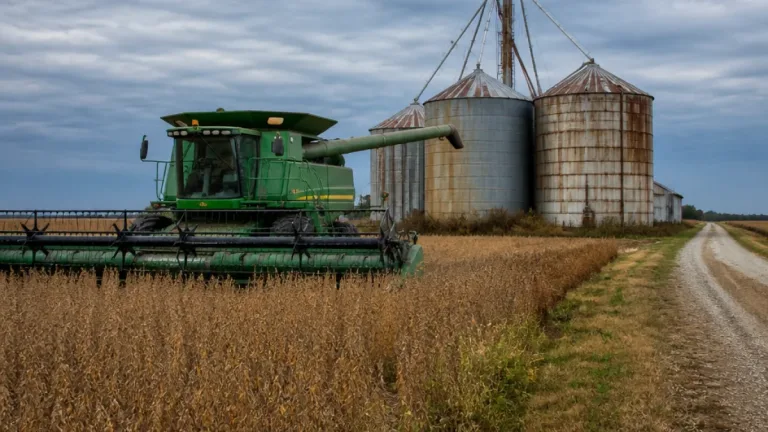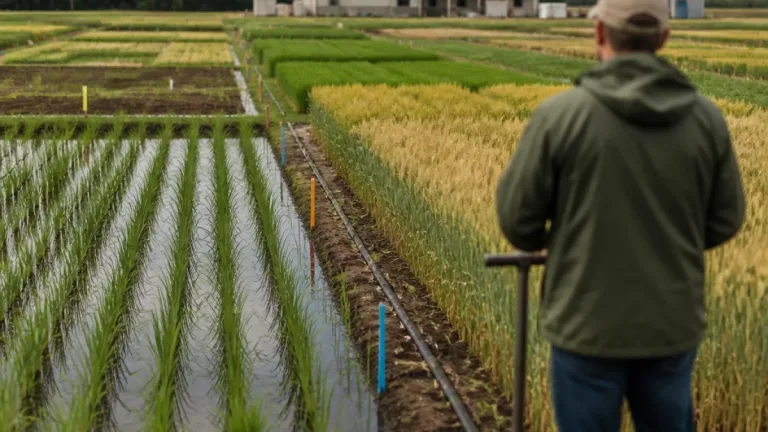
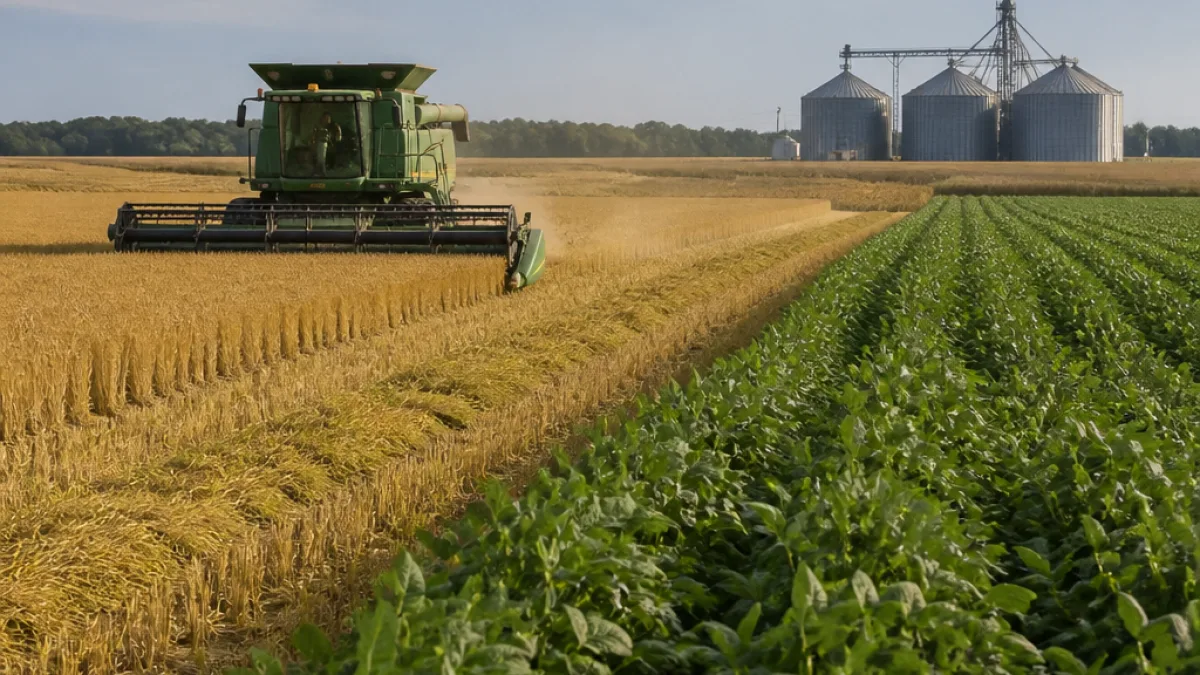
Arkansas rice acreage fell below 1 million acres this year, marking the crop’s lowest level in about half a century as farmers respond to weak prices and high production costs. The decline comes as the state’s harvest nears completion and growers weigh whether rice can cover the expense of planting and maintaining it.
Robert Stobaugh, who farms with his family at Stobaugh Brothers Farms in Central Arkansas, reduced his rice acreage from 1,500 acres to 1,100 acres. Fields that had been planted with rice were used for soybeans instead, he said.
“It declined by a third this year. We only have 1,100 [acres]. And it’s simple economics. We could not afford to lose any more money than that.”
Stobaugh said farmers already expected a difficult season when they made planting decisions in March and April. Rice requires substantial spending before harvest, and he said the crop appeared likely to produce no more than a break-even return.
“We knew we were planting, at best, at best, a breakeven crop in March and April,” Stobaugh said.
Fuel and fertilizer add pressure
Jarrod Hardke, a row-crop expert with the University of Arkansas System Division of Agriculture Cooperative Extension Service, said rice is especially exposed to rising fuel costs because of the work required to establish and maintain flooded fields. Farmers use irrigation pumps to hold water on the fields through the summer, adding to the crop’s fuel demands.
Hardke said the possibility of reaching 1 million acres remained during the early part of the year, although it was not considered likely. He said fuel and fertilizer prices then rose sharply as international events unfolded, increasing costs for agriculture generally and for rice in particular.
“And then we reached March, and let’s just put it as world events happened. And suddenly fuel and fertilizer prices start screaming upward which have a profound impact on agriculture in general, especially rice.”
Foreign competition affects the market
Arkansas rice farmers also face competition from producers in other countries. Hardke said U.S. consumers have increased their consumption of aromatic varieties such as basmati and jasmine during the past two decades. Those varieties generally come from foreign markets, he said.
Production systems also differ between the United States and other rice-growing countries. Hardke said foreign governments heavily subsidize rice production, with some governments guaranteeing prices for farmers and covering a significant share of production costs.
The acreage reduction reflects the choices individual farmers made as they confronted those conditions. For Stobaugh and other Arkansas rice growers, the decision involved shifting some fields to another crop rather than accepting additional losses from rice. Despite the financial pressure, Stobaugh said he and other farmers remain committed to rice farming and want conditions to improve.
- Arkansas rice acreage dropped below 1 million acres in 2026.
- Stobaugh Brothers Farms reduced its rice acreage by about one-third, from 1,500 acres to 1,100 acres.
- Higher fuel and fertilizer costs and foreign competition are among the pressures identified by the University of Arkansas Extension Service.