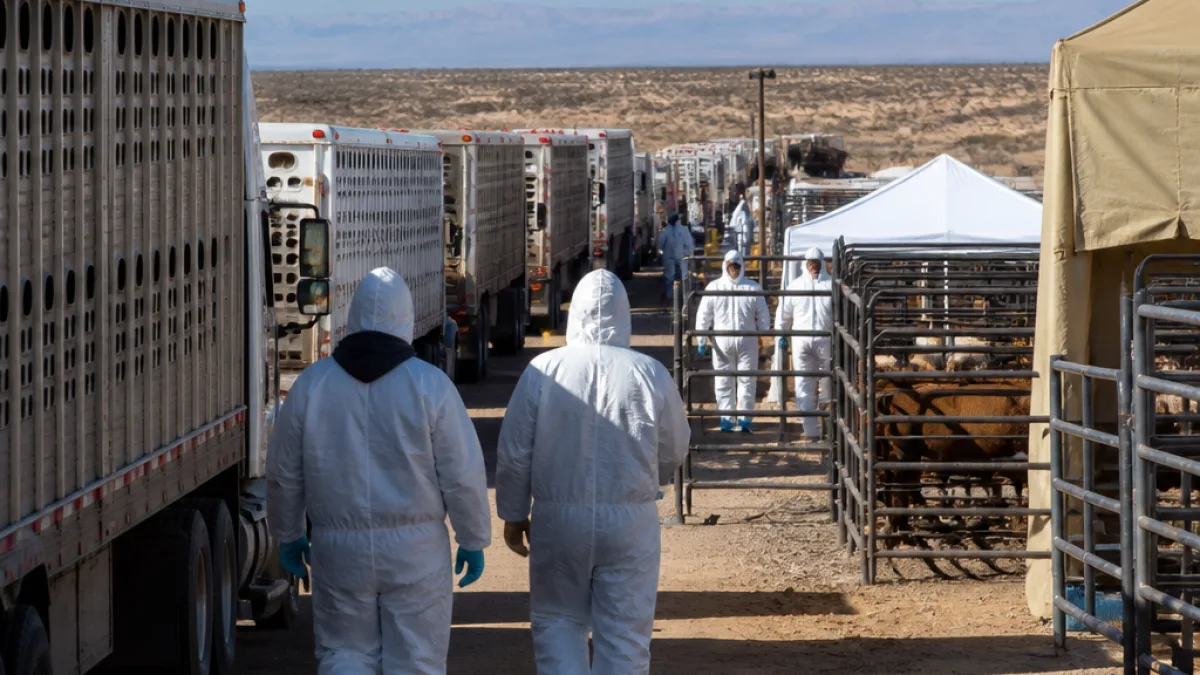
U.S. agriculture inspectors cleared Mexican cattle to move Monday through the Columbus, New Mexico, port of entry, the third crossing to resume imports since the New World screwworm reemerged in Mexico and then in parts of the United States.
New safeguards aim to balance herd rebuilding and animal health
The screwworm, a fly larva that infests the flesh of livestock, pets and humans, returned to North America in 2024 and has since prompted containment efforts across border communities. Officials said the parasite threatens the U.S. cattle industry, valued at about $113 billion, and that closing crossings had cost jobs and trade.
“As long as we can manage and mitigate that risk at an acceptable level, we will continue to process the safe and legal movement of cattle through these ports,” said Dudley Hoskins, undersecretary for the U.S. Department of Agriculture.
Authorities described the safeguards for reopened ports as multilayered: pre-export testing, prescribed treatments and inspections that occur before animals reach the border. Those measures are intended to limit the chance that an infected animal would enter the United States through a port of entry.
- Columbus is now the third U.S. port to resume Mexican cattle imports under the new rules.
- Before the recent outbreak, the U.S. imported roughly 1 million head of cattle per year from Mexico.
- More than 60 screwworm cases have been confirmed in Texas and New Mexico, including cattle, sheep, goats, horses and dogs; the first U.S. wildlife case was reported last week after screwworm was found on an elk.
Officials and ranchers on both sides of the border said they are confident the layers of treatment and inspection reduce the risk of introducing screwworm through ports. Nonetheless, animal-health experts warn the insect can move independently of livestock: flies may cross the border on their own, meaning vigilance by ranchers, hunters and pet owners remains necessary.
Market context and timeline
Reopening crossings could ease supply constraints for U.S. producers still rebuilding herds depleted by drought. But analysts and officials cautioned that reopening ports will not immediately restore pre-outbreak import levels or produce rapid relief at the consumer level for beef prices. Reestablishing the annual flow of roughly 1 million head will take time, they said.
Containment and surveillance activity has intensified since the first confirmed U.S. case in Texas in June. USDA and state animal-health authorities continue to test, treat and monitor livestock and wildlife in affected areas.
For Arkansas producers, the return of regulated imports is one factor in a complex market: domestic herd sizes, drought recovery, feed costs and export demand will also affect supplies and prices in the months ahead.