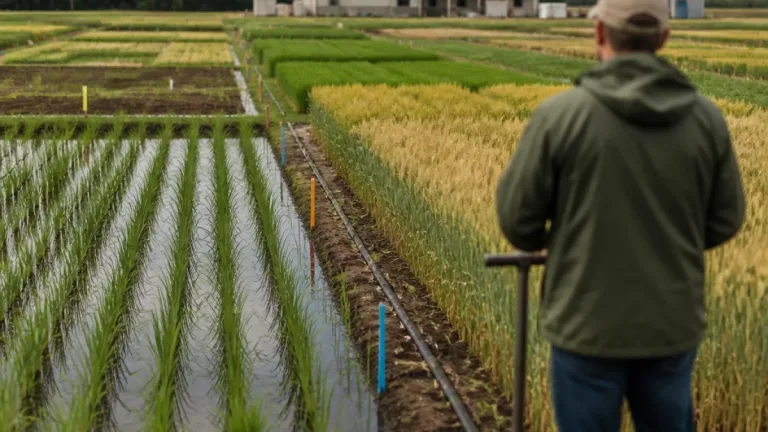
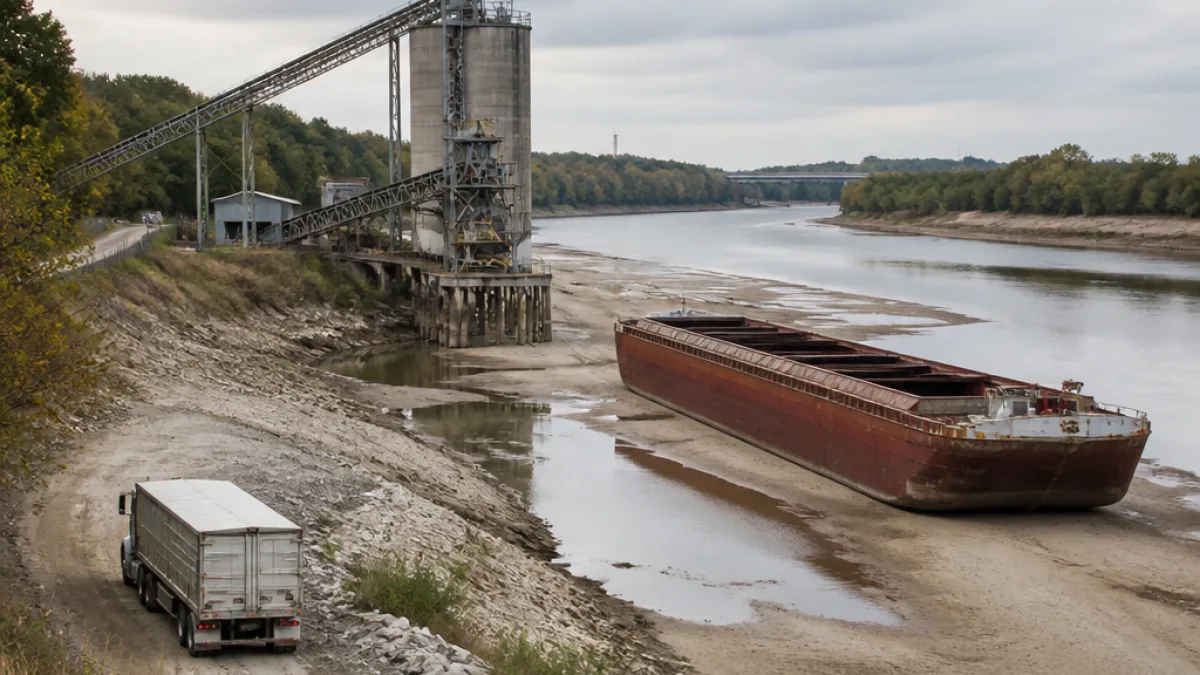
Low water on the Mississippi River is already cutting into Arkansas farm gate prices, according to research by economists with the University of Arkansas Division of Agriculture.
Study links barge disruptions to weaker local prices
The paper, published in the journal Agribusiness, examined how higher barge transportation costs from shallow navigation are transmitted through the grain marketing system and alter the local basis — the difference between cash prices and futures — that Arkansas corn and soybean growers receive.
Authors Yuan Zhang, a postdoctoral fellow, and Eunchun Park, an assistant professor in the department of agricultural economics and agribusiness and the Fryar Price Risk Management Center of Excellence, worked with collaborators at Utah State University and North Dakota State University. The Fryar Center is part of the University of Arkansas Division of Agriculture’s research programs.
“The timing of the current low water levels is particularly concerning,” Yuan Zhang said. “With large volumes of newly harvested grain entering the market, transportation demand is already high. Low river levels can further constrain barge capacity and increase shipping costs, putting additional downward pressure on local grain basis.”
The research highlights that when barge capacity tightens, shipping costs rise and those costs are passed back through the marketing chain. That process tends to lower local cash prices relative to futures, a change that can leave producers receiving less income precisely when they are making harvest and marketing decisions.
Federal outlook and seasonal timing add risk
The timing of the low-water conditions compounds the effect, the researchers said. The U.S. Army Corps of Engineers’ August State of the River outlook warned that recent low-water trends could continue without normal to above-normal rainfall in key basins. That increases the chance that constrained navigation will overlap with the peak volume of newly harvested grain.
- Who conducted the study: Yuan Zhang and Eunchun Park with the University of Arkansas Division of Agriculture and the Fryar Price Risk Management Center of Excellence, with collaborators at Utah State and North Dakota State.
- What they found: Lower river levels reduce barge capacity, boost transportation costs and depress local corn and soybean basis.
- Why timing matters: Newly harvested grain entering markets increases transportation demand, intensifying the price impact.
The Mississippi River serves as a major export corridor for U.S. grain, and disruptions there can have regional price effects. The study identified parts of Arkansas among the Southern areas most exposed to basis declines when river navigation is impaired.
Researchers recommended that producers and stakeholders factor transportation constraints into marketing plans when low-water conditions coincide with harvest flows, though the paper focused on observed pass-through mechanisms rather than prescribing specific actions.
State and federal waterway monitoring will continue to shape navigation capacity, and the Corps’ outlook remains a key reference for the season ahead as Arkansas farmers complete harvest and make selling decisions.