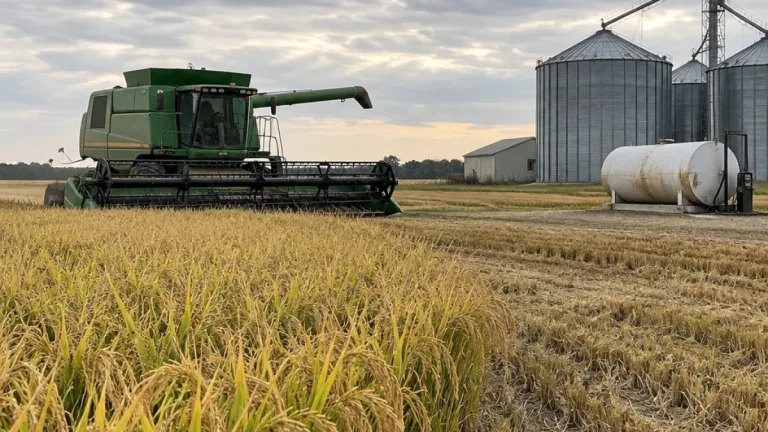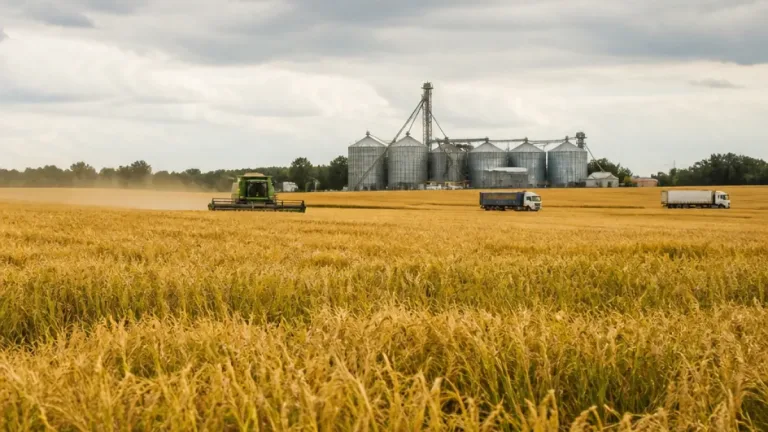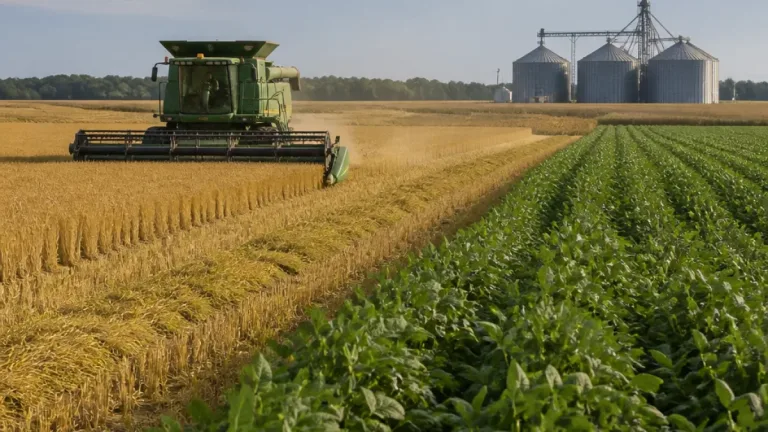
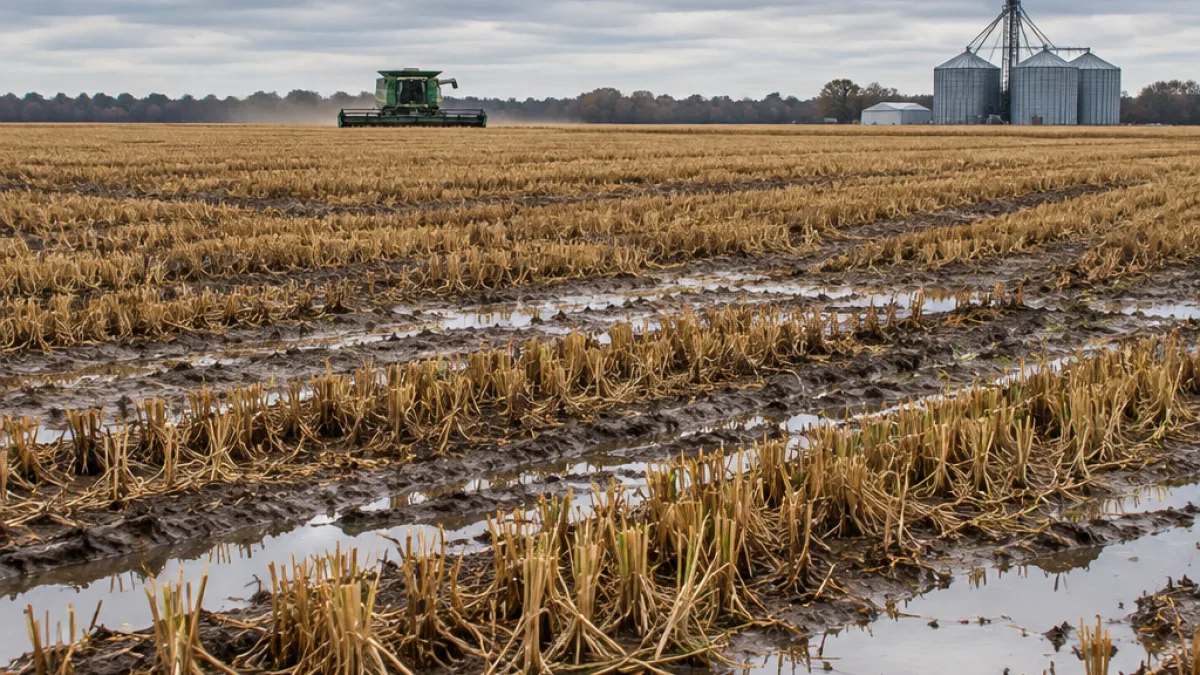
Arkansas’ rice harvest ended last week as prices for several crops moved higher and grain sales to China and Mexico provided additional market activity, according to Scott Stiles, an agricultural economist with the University of Arkansas Cooperative Extension Service.
Stiles said rice has been one of the strongest-performing crop markets this year. Contracts beginning in January are at their highest level in four years, he said, while harvest activity in eastern Arkansas has largely concluded.
The stronger prices come as the state’s rice production is expected to decline. Rice yields are projected to reach a nearly 50-year low, Stiles said. The projection reflects a reduction in the number of acres planted in rice, with some land that previously would have gone to rice planted in other crops this year.
Arkansas remains the leading rice state
Arkansas continues to lead the nation in rice production. The state’s rice industry is concentrated heavily in eastern Arkansas, where the five leading rice-producing counties are Cross, Lawrence, Poinsett, Jackson and Lonoke.
The county ranking underscores the importance of rice production to the eastern part of the state, even in a year when fewer acres were planted. The harvest conclusion also marks the point when producers and agricultural analysts turn more attention to contracts for delivery in the coming months.
- Rice harvest: Ended in Arkansas last week.
- January contracts: At their highest level in four years, according to Stiles.
- Yield outlook: Projected to be near the lowest level in about 50 years.
- Leading counties: Cross, Lawrence, Poinsett, Jackson and Lonoke.
Stiles also said significant grain sales had been completed with China and Mexico as harvest neared completion. The sales were cited as part of the recent improvement in crop prices, although the information provided did not include contract volumes or prices for the individual commodities.
Rice is among the crops that shape Arkansas’ agricultural economy, but the state’s farmers also produce soybeans, cotton and other row crops. This year’s acreage shift away from rice is reflected in the projected yield figure even as rice contracts have performed better than they have in recent years.
The market assessment was published as farmers finished bringing the 2026 rice crop out of the fields. The University of Arkansas Cooperative Extension Service provides agricultural economic information to producers, including analysis of crop markets and conditions affecting Arkansas farming.