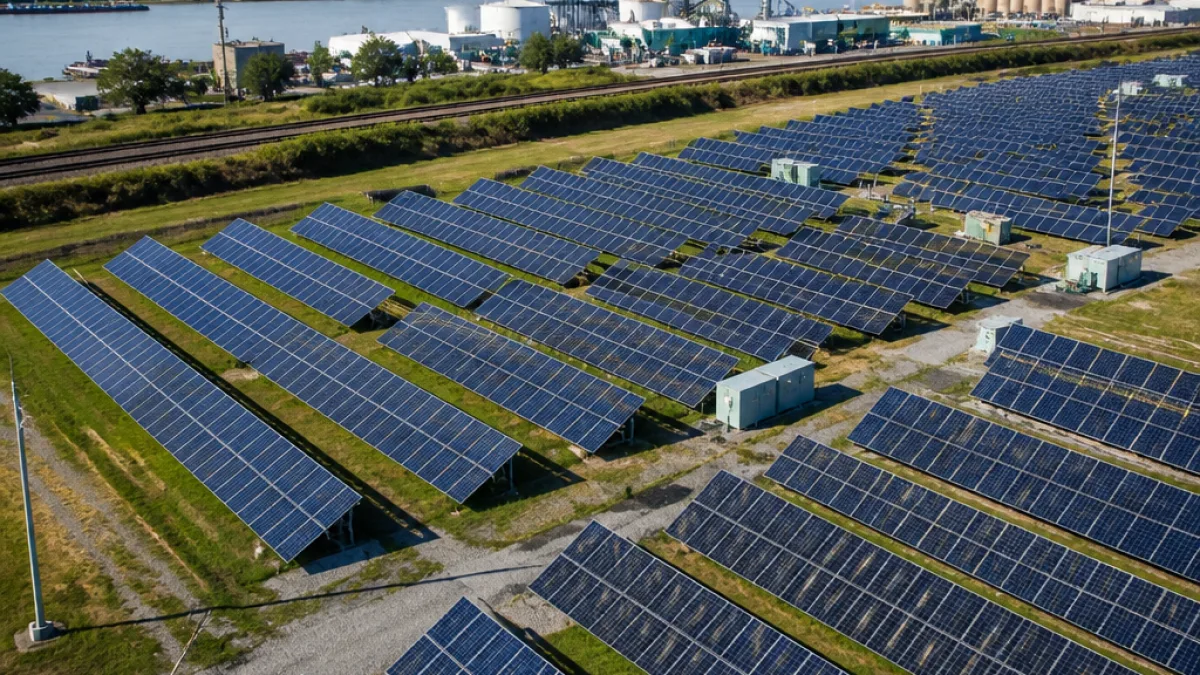
Little Rock has completed a municipal solar project expected to reduce the city’s electricity costs by about $1 million a year, city officials said Friday.
The array at the Port of Little Rock has a capacity of 6.3 megawatts of direct current and 4.9 megawatts of alternating current. Officials said it should produce enough electricity to offset approximately 70% of the city’s electricity consumption.
The project was completed for less than its approved $12 million budget. Funding was approved in 2024, and the city said the installation supports its goal of powering municipal operations entirely with clean energy by 2030.
Project costs and expected output
Mayor Scott said the project was intended to address both energy use and municipal costs.
“Our guiding principle has always been that sustainability should benefit both our environment and our taxpayers. This project delivers on both fronts. We're reducing long-term operating costs, making responsible use of public dollars and moving closer to our goal of powering City operations entirely with clean energy by 2030. That's how we create a more sustainable Little Rock.”
The project’s reported financial and energy targets are:
- $1 million in anticipated annual electricity-cost savings.
- 70% of the city’s electricity consumption expected to be offset by the array.
- $870,000 in savings compared with the city’s budget for the project.
Scenic Hill Solar CEO Bill Halter said the company delivered the project below the city’s budget. The company was identified as the project partner in the city’s announcement.
“We're proud to have partnered with the City of Little Rock to deliver a project that will generate clean, renewable energy for decades while providing substantial savings for taxpayers. We are especially proud to have delivered this project $870,000 below what the City had budgeted for it.”
Halter also said the city’s investment would provide long-term savings. The completed array is one of several solar and advanced-energy projects that have recently been completed or are underway in Arkansas, according to KATV.