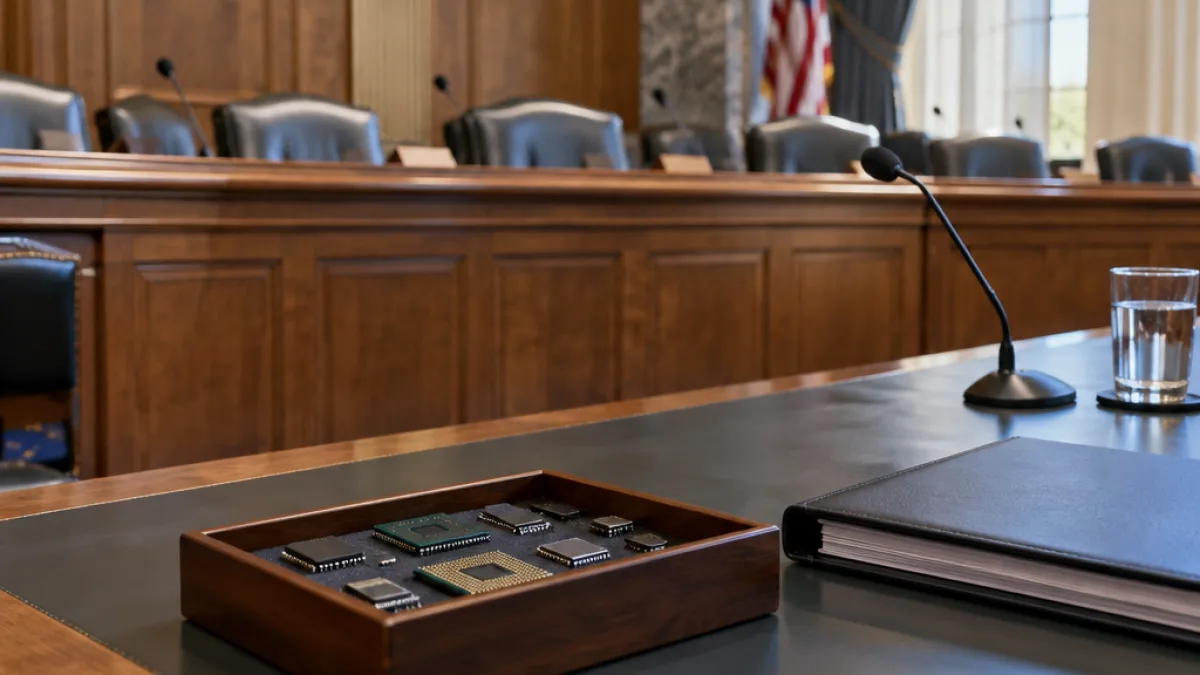
Sen. Tom Cotton, R-Ark., said Congress should investigate whether advanced U.S. semiconductor exports reached China through a Singapore-based company that federal officials have placed on a national security trade blacklist.
Cotton, chairman of the Senate Intelligence Committee, renewed his call for congressional scrutiny after Nvidia’s board reinstated Jensen Huang as the company’s president and CEO. Huang had resigned Nov. 12 following media reports about an extramarital affair involving a former senior executive at Megaspeed, a company that purchased billions of dollars in advanced chips from Nvidia.
“I have warned the administration from the start about Communist China obtaining our most advanced chips through both smuggling and remote access. The controversy with Nvidia and Megaspeed is just the tip of the iceberg, and it’s not resolved because Jensen Huang has his job back.”
— Sen. Tom Cotton
Cotton said on social media that the controversy raised questions about whether export controls were circumvented. He also said Congress would pursue legislation addressing the transfer of advanced chips, including a measure he calls the Chip Security Act.
Planned congressional scrutiny
Huang is scheduled to testify before the Senate Banking Committee on Dec. 3. Some Republicans have also called for Commerce Secretary Howard Lutnick to testify about the department’s handling of chip sales to Megaspeed.
Sen. John Kennedy, R-La., a member of the Banking Committee, said the Commerce Department may have knowingly allowed Nvidia and Megaspeed to evade restrictions. Kennedy said he wanted Lutnick and Treasury Secretary Scott Bessent before the committee and under oath to answer questions about the transactions.
- Nov. 12: Huang resigned as Nvidia’s president and CEO after media reports about his relationship with a former Megaspeed executive.
- Monday: Nvidia’s board reinstated Huang, and the company’s stock rose more than 30% that day.
- This week: The Commerce Department added Megaspeed and other Southeast Asian companies to a trade blacklist over national security concerns.
Cotton said the proposed legislation would be part of a broader congressional effort to strengthen controls on advanced chips. He wrote that lawmakers would pursue “overwhelmingly bipartisan chip export-control bills,” including his own measure.
The dispute centers on advanced semiconductors used in artificial intelligence systems and on whether existing restrictions have prevented sensitive technology from reaching China. Cotton has warned that chips could reach China through smuggling or remote access, while congressional committees prepare for testimony about the Nvidia-Megaspeed transactions and the government’s enforcement of export controls.