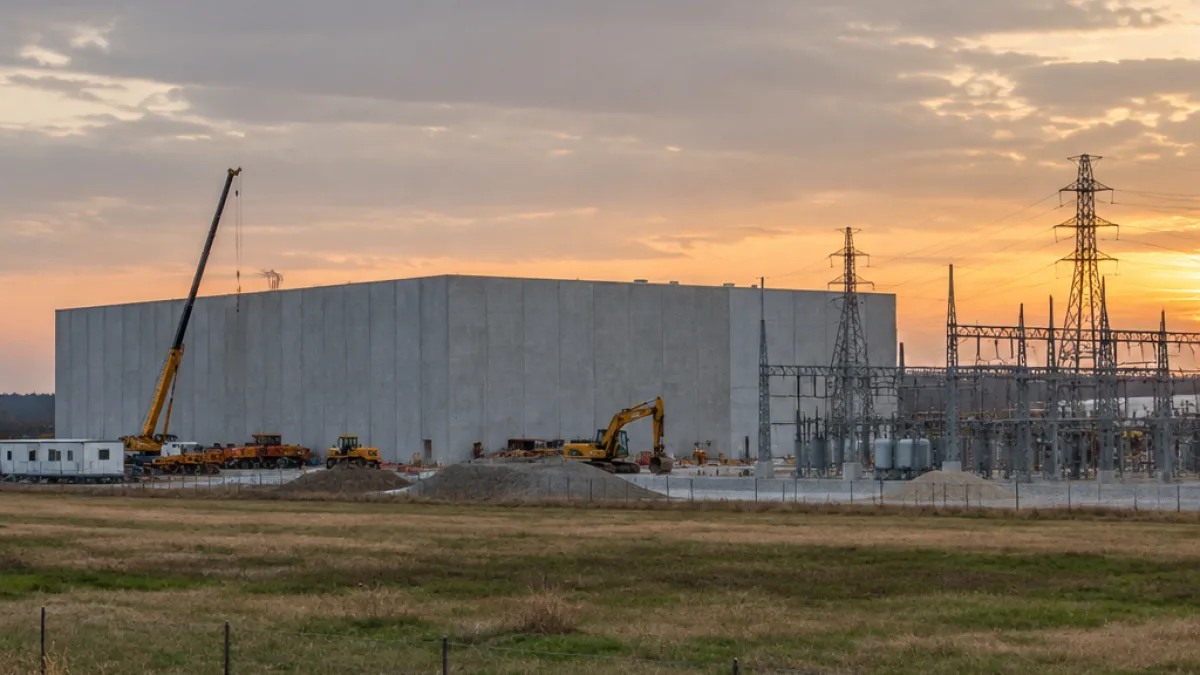
Arkansas voters’ Nov. 3 decision on Issue 3 came amid rising electricity costs and growing public attention to the expansion of data centers, according to polling and rate data cited by Arkansas Business.
Residential electric bills in Arkansas increased an average of 7.8% from August 2025 to August 2026, while commercial rates rose 9.1% over the same period, according to the U.S. Energy Information Administration. The commercial category includes businesses such as offices, retail facilities and data centers.
Rates rise as data center projects expand
The national figures also showed increases across customer classes. Average U.S. residential electricity rates were 10% higher in August 2026 than in August 2024. Commercial rates increased between 11.8% and 13.5% over that period, while industrial rates rose 7.3% from August 2025 to August 2026.
| Category | Change cited | Period |
|---|---|---|
| Arkansas residential | 7.8% | August 2025-August 2026 |
| Arkansas commercial | 9.1% | August 2025-August 2026 |
| U.S. residential | 10% | August 2024-August 2026 |
| U.S. industrial | 7.3% | August 2025-August 2026 |
The figures were part of a broader debate over whether large artificial intelligence and data center facilities are contributing to higher power costs. The facilities require substantial electricity and are being developed alongside other commercial and industrial customers that use the power grid.
“56% of responding voters said AI and data centers were a ‘crucial or major’ factor in how they voted.”
The polling was conducted by SSRS, described as an independent, nonpartisan group. It also found that 76% of respondents opposed data center development in their own communities. The figures measure voters’ views and the factors they identified in casting their ballots; they do not establish that data centers caused any particular change in an individual customer’s bill.
Project scale
One Arkansas data center project is expected to employ about 1,500 to 2,000 construction workers. State Rep. Aaron Pilkington described it as the largest economic development project ever in Arkansas. The project was cited in the discussion of Issue 3 and the competing concerns over construction activity, economic development and electricity costs.
The rate increases and polling results place utility affordability and data center development at the center of the Arkansas vote’s economic debate. The information cited includes the EIA’s rate measurements, the SSRS polling and the projected construction workforce for the data center project.