Tontitown officials are reviewing three proposed methods for treating wastewater from the Eco-Vista Landfill as the landfill operator works to comply with local pretreatment and discharge requirements.
WM, which owns Eco-Vista, submitted a 19-page treatment evaluation report Tuesday to the city, Tontitown City Engineer Zak Johnston said. The evaluation was prepared by SCS Engineers and examines treatment systems with different goals, including reducing odor-causing organic compounds, lowering ammonia-nitrogen and removing total nitrogen.
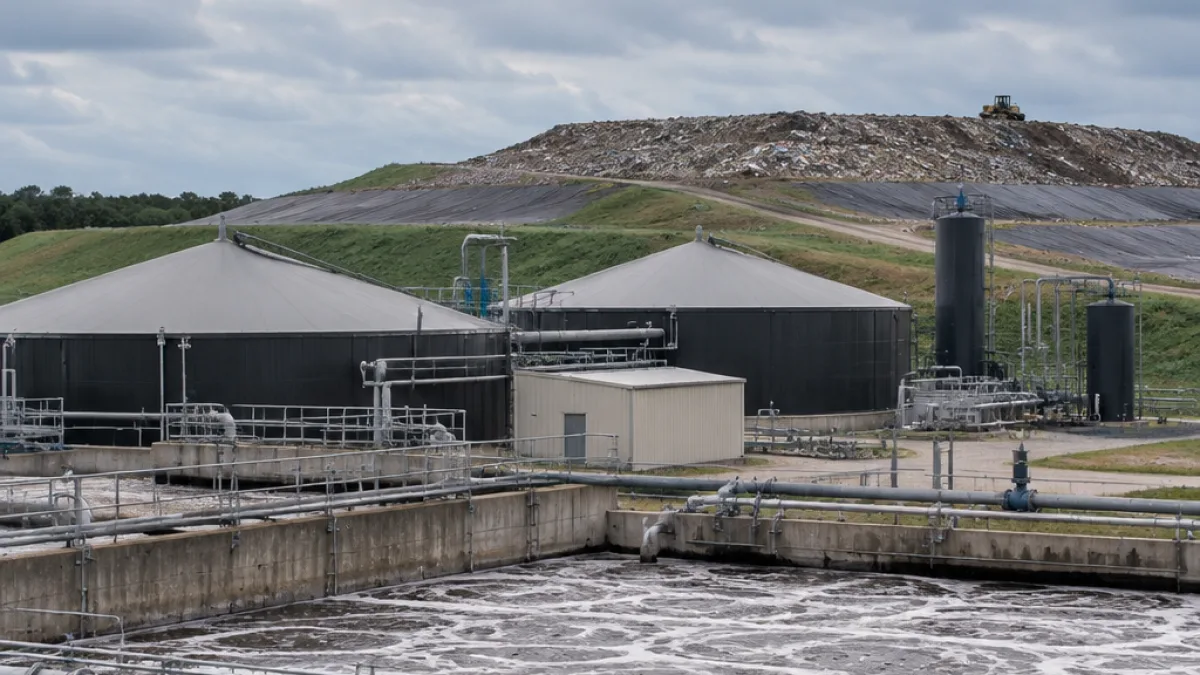
Landfill leachate forms when rainwater moves through garbage and absorbs chemicals, organic compounds and metals. The liquid must be treated before it can enter a wastewater system under requirements reviewed by the city and its wholesale treatment partner, the Northwest Arkansas Conservation Authority.
“They didn't actually pick one. I think they're leaving that up to the city to review the different proposals and pick one from the three that best aligns with our pretreament requirements and our wholesale treatment partner.” — Zak Johnston, Tontitown city engineer
The systems under review
The first alternative would use a membrane bioreactor. That system combines biological treatment with membrane filtration, a pressure-driven process that uses a semipermeable barrier to separate contaminants and solids from wastewater.
The other two alternatives would use a moving bed biofilm reactor. In that system, microorganisms attached to small carrier materials break down organic compounds. One of those alternatives also is designed to treat ammonia. Both moving bed biofilm reactor options include dissolved air flotation, which separates suspended solids from treated wastewater.
- The membrane bioreactor option is designed to address odor-causing organic compounds and total nitrogen.
- The moving bed biofilm reactor options focus on biological treatment, with one also addressing ammonia.
- The latter two alternatives use dissolved air flotation to remove suspended solids.
The membrane bioreactor alternative is designed to use nitrification and denitrification to reduce total nitrogen to below 50 milligrams per liter. Nitrification and denitrification are biological processes used to transform nitrogen compounds during wastewater treatment.
Regional wastewater connection
The Northwest Arkansas Conservation Authority is a regional public authority that manages wastewater and biosolids infrastructure across Benton and Washington counties. Johnston said Tontitown will compare the three alternatives with the requirements of the city’s pretreatment program and the authority’s wastewater system before selecting an approach.
The submitted evaluation gives city officials separate treatment designs to examine rather than a single system selected by WM. The proposals differ in the pollutants they are designed to reduce and in the biological and physical processes used to treat the landfill runoff.