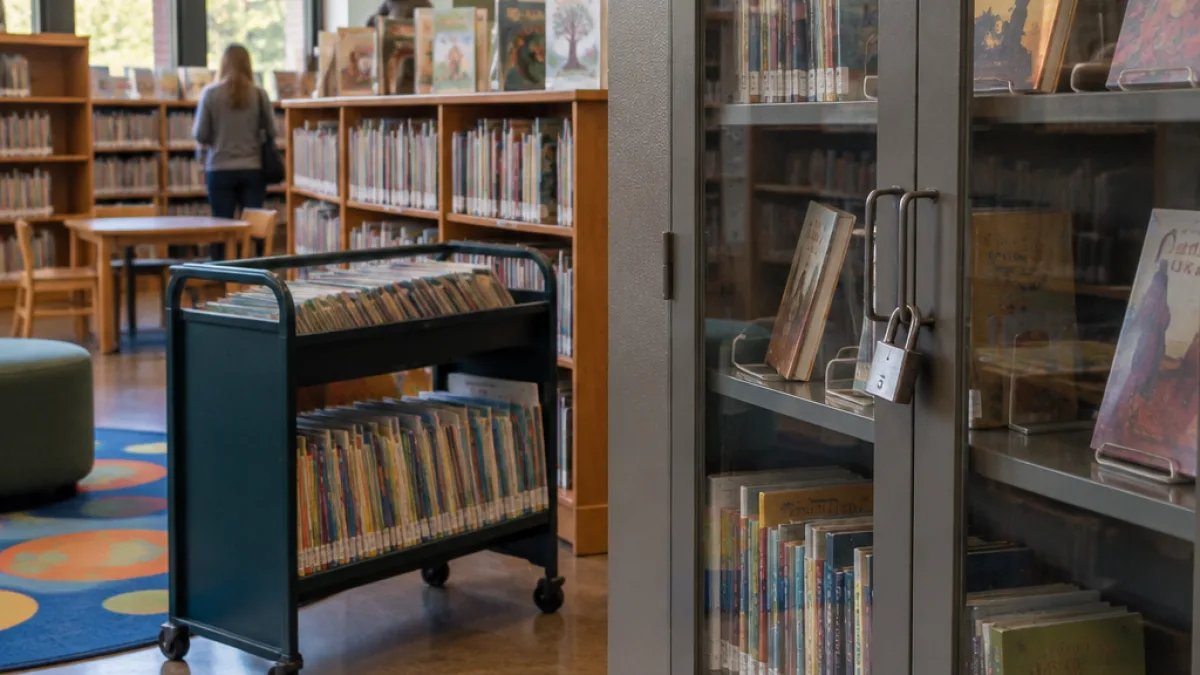
Arkansas libraries are changing how some materials are handled while a federal court challenge to Act 372 continues, even though the 2023 law has not taken effect.
The law would make furnishing a harmful item to a minor a misdemeanor punishable by up to one year in jail. A separate provision that has not been challenged would make it a Class D felony for a school or public library employee to knowingly distribute obscene material.
A federal appeals court sided with the state in July. Fayetteville Public Library and other plaintiffs continue to await the result of their appeal, according to KNWA/KFTA. The litigation has left library officials weighing policy changes and potential criminal liability before the law is enforceable.
Law leaves enforcement questions
Act 372 gives city and county governing bodies the final say over challenged library materials. Enforcement of the misdemeanor provision would fall to local prosecutors.
David Johnson, executive director of Fayetteville Public Library, said the law does not clearly define what qualifies as harmful or identify which library employee could face prosecution. He said the Arkansas attorney general’s office told the library that merely shelving a book would not be prosecuted by the state, but local prosecutors could make their own decisions about whether to bring a charge.
“Censorship can occur at many levels. It can be overt above the table, or it can be happening in a very quiet, subtle way where certain items are just not being added to the collection for fear of prosecution.”
Johnson said.
Johnson also described uncertainty over responsibility for a disputed item, including whether liability could attach to the person who purchased it, shelved it, handed it to a patron or checked it out.
- Act 372: Furnishing a harmful item to a minor would be a misdemeanor carrying up to one year in jail.
- Separate provision: Knowingly distributing obscene material could be a Class D felony for a school or public library employee.
- Local role: City and county governing bodies would decide challenges involving library materials, while local prosecutors would handle criminal enforcement.
Libraries adopt restrictions
The Jonesboro Public Library in Craighead County adopted policies that bar people under 18 from using self-checkout, checking out DVDs or entering or buying books from the Friends of the Library Bookstore.
In Independence County, the local library no longer allows minors to check out manga or adult-oriented graphic novels. Parents may check out those materials for their children, and the library director has said the items are being treated as “R-rated.”
The changes are occurring as the plaintiffs’ legal challenge remains pending and the law’s criminal provisions have not yet taken effect. The case’s next development will come through the ongoing appellate process.