Waterfowl hunting clubs in Southwest Arkansas are reducing disturbance and setting aside areas where ducks can remain undisturbed during migration, using research from the University of Arkansas at Monticello to guide their management decisions.
The approach is based on work by Douglas Osborne, a wildlife ecology professor at UAM and director of the Snowden Waterfowl Center of Excellence. Osborne has studied waterfowl movement, habitat use and management in Arkansas for more than 10 years.
His research is conducted with support from landowners and duck hunters and is connected to the Arkansas Forest Resources Center. The center is part of the Arkansas Agricultural Experiment Station, the research arm of the University of Arkansas Division of Agriculture.
Rest areas protect undisturbed habitat
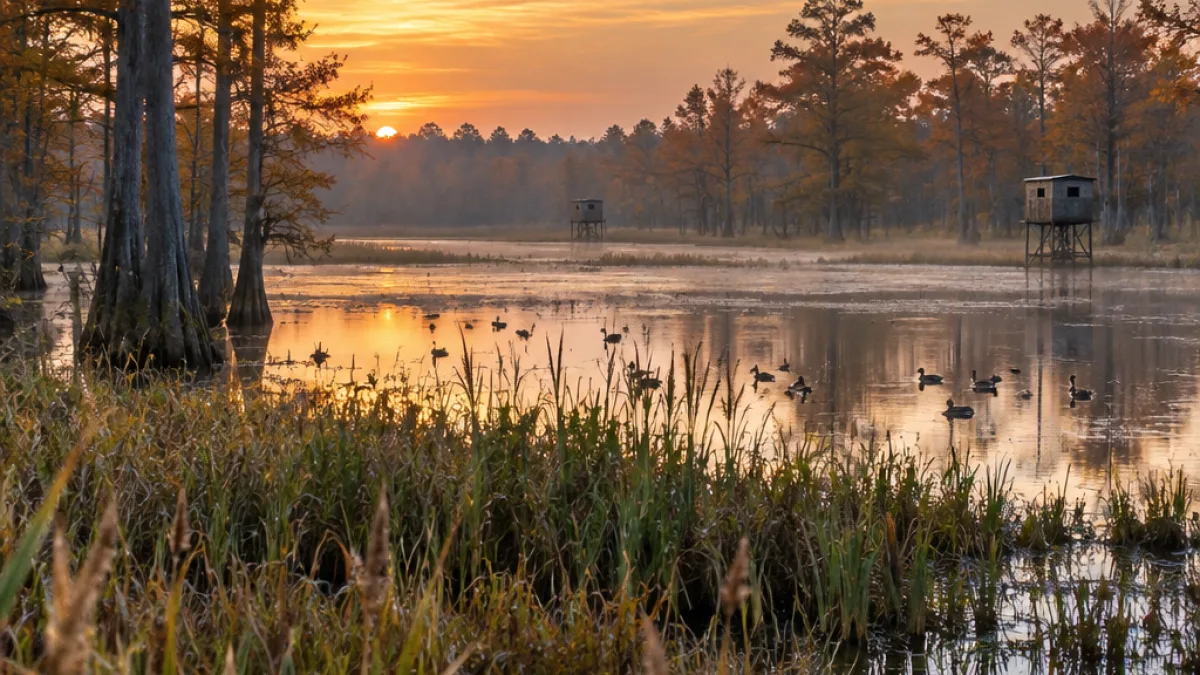
Cypress Bayou Hunting Club began following Osborne’s recommendations in 2024 by creating a large rest area. Subsequent tracking data showed that ducks using the area remained there instead of repeatedly moving after each new weather system.
“If you want your hunting areas to be good, you have to have a place for birds to stay rested and undisturbed. It’s almost like you’re keeping a bounty that you’re able to take care of and hunt throughout the rest of the season.”
Brandon Wren, Cypress Bayou Hunting Club member
The club’s experience led it to protect and expand areas where waterfowl can rest. The management strategy combines lower hunting pressure with designated refuge areas, allowing ducks to remain on the property during the migratory season rather than being continually displaced by activity.
- Research focus: Osborne’s work examines waterfowl movement, habitat use and management in Arkansas.
- Club action: Cypress Bayou established a large rest area in 2024 and used tracking data to evaluate the decision.
- Management principle: The clubs are limiting disturbance and preserving places where ducks can remain undisturbed.
The research gives landowners and hunters information for decisions about how their properties are managed. In Southwest Arkansas, the clubs are applying that information by balancing hunting areas with protected rest areas during the waterfowl season.